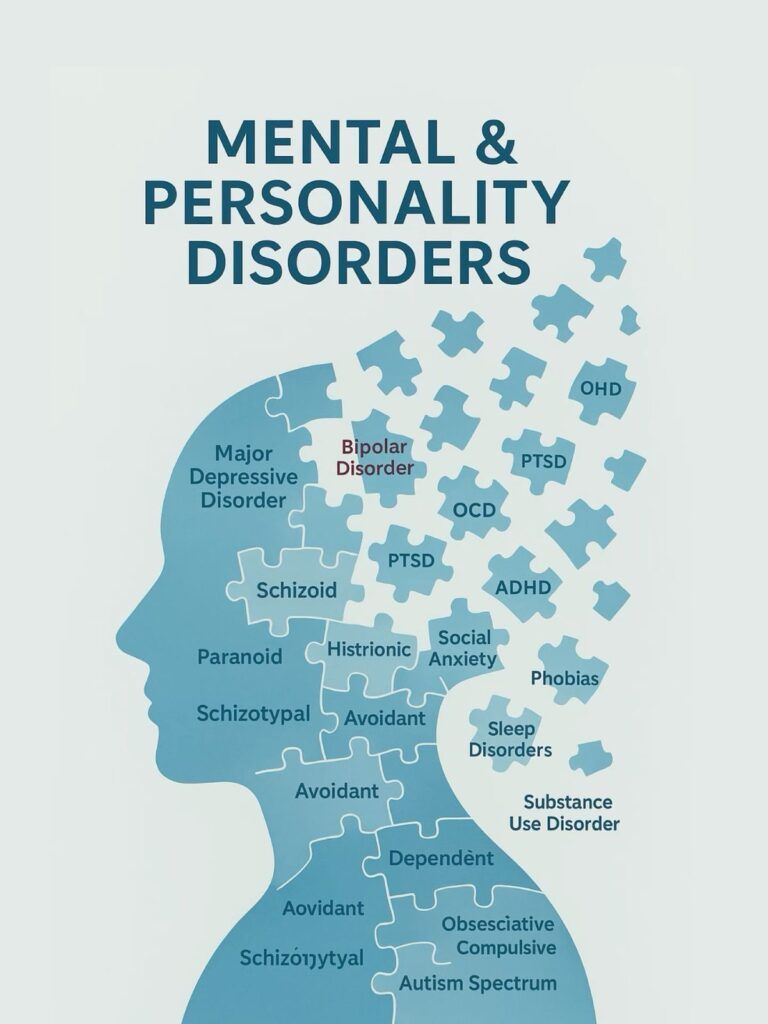
As a college student pursuing BA Psychology, I often come across people who casually use terms like anxiety, depression, or OCD in everyday conversations. But studying human behavior academically made me realise how deep and complex mental disorders truly are.
Writing this blog is my way of creating awareness with compassion, accuracy, and the scientific understanding I am developing as a future clinical psychologist.
What Are Mental Disorders?
Mental disorders are psychological conditions that affect a person’s thinking, emotions, behavior, and ability to function in daily life. They are not “mood swings” or “phases.” They are real, diagnosable, and treatable health conditions.
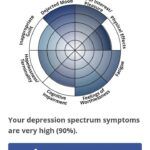
Depression is one of the most widespread mental disorder, especially among young adults and college students like me. It is far more than sadness.
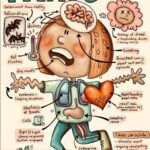
As a psychology student, the more I learn, the more I realise that depression is not just “feeling sad” or “being unmotivated.” It is a condition that quietly rewires a person’s emotional world and pushes them into a space where even the smallest tasks feel overwhelming.
For many students, young adults, and even high-functioning individuals, depression hides behind a smile. It silently influences thoughts, energy, behavior, and even physical health. Understanding depression from a scientific and empathetic standpoint helps us recognise that it is not a weakness—it is a real medical condition that needs validation, support, and treatment.
Symptoms of Depression
- Persistent low mood
- Fatigue and low energy
- Loss of interest in daily activities
- Sleep disturbances
- Feelings of hopelessness
- Difficulty concentrating
Why Depression Happens
Depression can emerge due to biological, psychological, and social factors—like trauma, hormone imbalance, genetic vulnerabilities, or academic pressure.
My Psychology Learning Insight
When I started studying psychology, I realised that depression changes how a person interprets every experience. It narrows their emotional world and creates a constant internal battle. Understanding this made me more empathetic toward both my peers and myself.
2. Schizophrenia – A Disorder Often Misunderstood
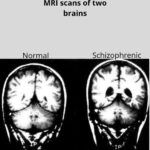
Schizophrenia is a severe mental disorder that affects perception, thinking, and behavior.
As I studied this disorder, I realised how misunderstood it truly is. Media often portrays schizophrenia inaccurately, creating fear instead of awareness. In reality, people with schizophrenia are battling distorted perceptions—such as hearing voices or holding beliefs that feel absolutely real to them.
Understanding schizophrenia requires compassion, patience, and knowledge that the disorder is caused by a mix of genetics, brain chemistry, and environmental factors—not personal choice.
Symptoms
- Hallucinations (seeing or hearing things that aren’t there)
- Delusions
- Disorganized speech
- Social withdrawal
Reality Check
People with schizophrenia are not “dangerous.” They are individuals who need strong support systems and proper treatment.
OCD is a mental disorder characterized by recurring intrusive thoughts (obsessions) and repetitive actions (compulsions).
Through my psychology coursework, I came to understand how exhausting OCD can be. People with OCD know their thoughts are irrational, but the anxiety is so powerful that they feel compelled to act anyway. Their mind often becomes a never-ending loop between fear, doubt, and repetitive rituals.
Recognising OCD as a serious clinical condition helps us support individuals instead of making jokes or assumptions.
Common OCD Patterns
- Checking locks repeatedly
- Excessive cleanliness rituals
- Fear of contamination
- Repeating tasks until “it feels right”
Psychology Insight
In my studies, I saw how OCD gives a false sense of control. People don’t want to do rituals—they feel forced by anxiety.
Anxiety disorders are among the most common mental disorders, especially in students.
These disorders affect how a person thinks, feels, and physically reacts. Racing thoughts, constant fear, sweating, trembling, and restlessness can make even simple tasks feel threatening.
Anxiety disorders are often triggered by stress, trauma, academic pressure, or an overactive fear response in the brain. Understanding this helps us treat anxiety as a medical condition—not a personality flaw or “overthinking.”
Types
•Generalised Anxiety Disorder (GAD)
•Panic Disorder
•Social Anxiety Disorder
•Phobias
Symptoms
•Racing heart
•Restlessness
•Excessive worry
•Fear of judgment
Why Students Experience Anxiety
Academic pressure, future uncertainty, competition, and social stress all contribute to anxiety disorder.
5. Dissociative Disorders – Feeling Disconnected From Reality
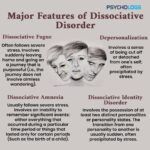
This mental disorder affect a person’s identity, memory, or sense of self.
People experiencing dissociation often describe it as feeling detached from themselves, like watching their life from outside their body. Some lose memories of certain events, while others may feel like time skips or reality becomes foggy.
These disorders remind us how powerful the mind is—sometimes, it protects itself by creating distance. Understanding dissociation through a trauma-informed lens helps us replace judgment with empathy.
Types
- Dissociative Amnesia
- Depersonalisation Disorder
- Dissociative Identity Disorder (DID)
How It Feels
People often describe it as “watching life from outside their body” or “missing chunks of memory.”
How We Can Support People With Mental Disorders
- Listen without judgment
- Avoid labels or stereotypes
- Encourage therapy
- Promote self-care
- Educate others about mental disorders
As a psychology student, I believe kindness and awareness are the first steps in changing society’s mindset.